hp pain relief · Cedar Park, TX
Hip Pain
Hip pain that keeps coming back is almost never just a hip problem.
Root cause focused · Non-invasive · Cedar Park, TX
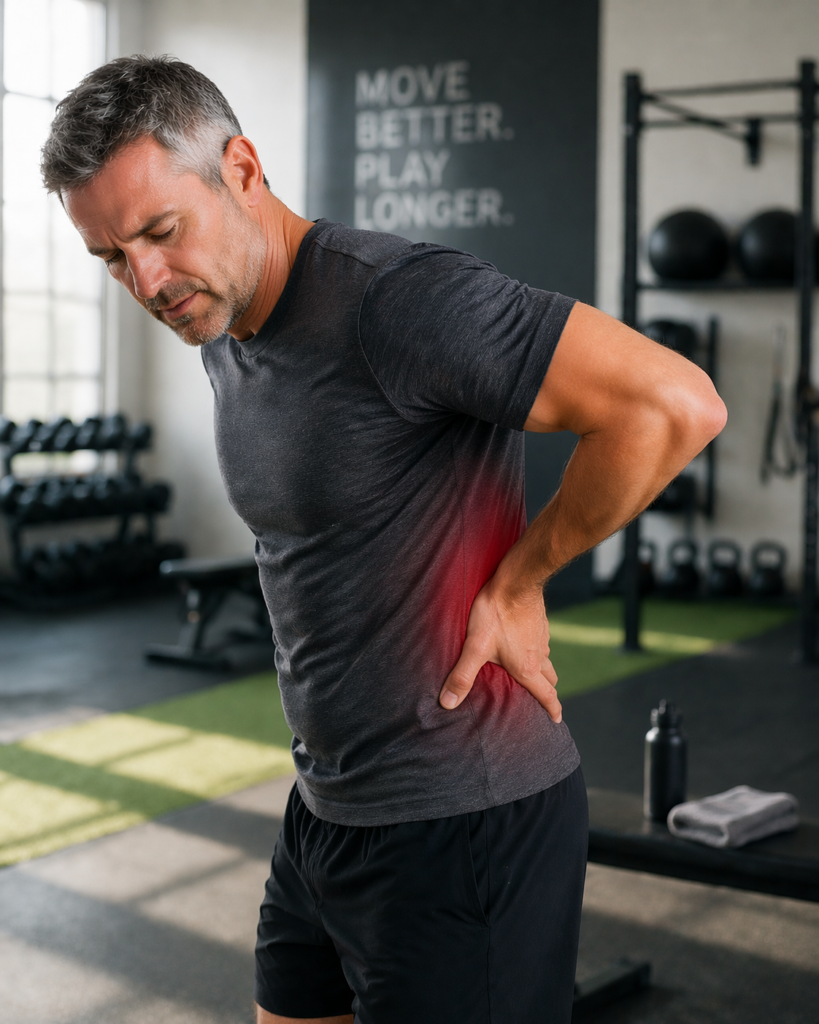
Does This Sound Like You?
If Any of These Feel Familiar — You're in the Right Place.
The hip is the most mobile joint in the lower body — designed to rotate, extend, flex, and absorb load in every direction. When it loses that mobility, the lumbar spine and knee quietly pick up the slack.
This is why hip problems so often show up first as low back pain or knee pain. The hip restricts and the body compensates — until something else breaks down enough to get your attention.
Treating the symptom without finding what’s driving it is why most hip pain keeps coming back.
Common Symptoms
- Deep aching or sharp pain in the hip, groin, or outer thigh
- Stiffness that limits rotation — getting in and out of a car, crossing your legs, or turning through your swing
- Pain that flares after sitting for long periods — then takes time to loosen up
- Discomfort during or after running, hiking, or training
- You've been told it's bursitis, arthritis, or a tight IT band — and stretching isn't fixing it
- Low back pain that might actually be coming from your hip — or a hip problem that's been blamed on your back
Specific Diagnoses We Treat
- Hip Bursitis (Trochanteric)
- Gluteal Tendinopathy
- Hip Impingement (FAI)
- Hamstring Tendinopathy
- Hip Flexor Strain
- Piriformis Syndrome
- IT Band Syndrome
- Hip Osteoarthritis
Here’s What Most People Get Wrong
The Problem Isn't Always Where the Pain Is.
When the hip loses mobility — through restriction, compensation, or disuse — the lumbar spine and knee absorb what the hip was supposed to handle. Over and over, every step, every rep, every round.
Our goal is always to reduce your hip pain — directly and as quickly as possible. Every treatment plan includes targeted work at the area of complaint. But pain relief alone isn’t enough if the mechanics driving that pain haven’t changed. That’s the difference between feeling better for a few weeks and actually fixing the problem.
Why Common Treatments Fall Short
Stretching
Injections
Rest
Every first visit begins with a thorough assessment of the hip, lumbar spine, and lower extremity as a system — identifying the primary driver before we treat anything.
Is this a true hip problem, a referred pattern from the lumbar spine, or both? That distinction drives everything that follows. The plan addresses both the pain and the pattern.
⛳ FOR GOLFERS
Hip mobility is one of the most critical physical requirements in the golf swing. Limited internal hip rotation forces the lumbar spine to compensate through rotation it was never designed to handle alone. This is one of the most common patterns we see in golfers with low back pain. Addressing the hip often resolves the back.
How We Treat It
A Specific Plan. Not a Generic Protocol.
Every case starts with understanding the whole picture — how your spine, hips, and body are actually working together. What we find determines what we do.
01
Identify the Breakdown
We assess hip mobility, lumbar mechanics, and how load is being distributed through the pelvis and lower extremity. Is this a true hip problem, a referred pattern from the lumbar spine, or both? That distinction drives everything that follows.
02
Restore Proper Mechanics
Chiropractic adjustments to restore joint function at the hip, pelvis, and lumbar spine. Myofascial therapy — including IASTM — to address soft tissue restrictions in the hip flexors, glutes, IT band, and surrounding musculature.
03
SoftWave TRT for chronic hip conditions — particularly effective for gluteal tendinopathy and bursitis that haven’t responded to rest and passive care.
Movement reeducation so the hip is doing its job — and the lumbar spine and knee aren’t compensating for what the hip was supposed to handle.
Related Conditions We Also Treat
SPINE
Low Back Pain
lower body
Knee Pain
spine
Neck Pain & Stiffness
upper body
Shoulder Pain
lower body
Plantar Fasciitis
lower body
Achilles & Heel Pain
faq
Common Questions.
What we hear most often before a first visit.
I have hip pain and low back pain. How do I know which one is causing the other?
Honestly — you might not, and that’s exactly the point. The hip and lumbar spine are so closely linked that pain in one almost always affects the other. A thorough assessment looks at both together, identifies the primary driver, and builds a plan that addresses the whole picture rather than treating one while ignoring the other.
I've been told I have hip impingement. Does that require surgery?
Not necessarily. Many cases of hip impingement respond well to conservative care — particularly when the mechanics driving the impingement are addressed. Improving hip mobility, correcting movement patterns, and reducing soft tissue restriction around the joint can significantly reduce pain and restore function without surgical intervention. Dr. Funk will give you an honest assessment at your first visit about what’s appropriate for your specific situation.
My doctor said my hip arthritis is "bone on bone." Is there anything left to do?
“Bone on bone” is a description of a structural finding — not a sentence. The amount of cartilage loss visible on imaging doesn’t always correlate with the amount of pain a patient experiences. Improving how load moves through the joint, reducing soft tissue restriction around it, and correcting the compensation patterns that have been overloading it can make a meaningful difference in pain and function — even in advanced cases.
HSA & FSA accepted. We are an out-of-network provider. Many patients use health savings accounts or receive partial reimbursement through their PPO plan. We’ll discuss your options at your complimentary consultation.
Ready for a Real Answer?
Find Out What's Actually Causing Your Hip Pain.
Not where it hurts. Why it hurts. Book your complimentary consultation and let’s build a plan to fix it — not just manage it.
15-minute call · No commitment · No pressure